Holistic Ayurvedic care for chronic and lifestyle diseases.
Rheumatoid Arthritis (RA) is an autoimmune disease affecting all age groups, more common in 30-50 years. Women are affected three times in comparison to male. It affects joints and their covering called synovial membrane and in the later stages leads to degenerative changes. During progress of the disease it may affect many other organs such as pleura and pericardium.
Ayurvedic treatment for RA is aimed at preserving the functionality of the joints by preventing joint destruction, keeping the inflammation and the associated symptoms like pain and stiffness under control, to maintain a maximal range of skeletal mobility and to avoid the development of deformities and complications. This is done by eliminating the cause and balancing all the vitiated doshas in the body.
Kooplicat Ayurveda Hospital helps you achieve this through a holistic approach comprising of diet modifications, lifestyle changes, stress management, herbal medication and ayurvedic therapies, yoga and pranayama that helps the body get back to the state of balance and harmony. We offer these individualized treatments after taking whole-body view into consideration which includes the patient’s physical constitution, lifestyle and food habits.
Polycystic ovary syndrome (PCOS) is a hormonal disorder common among women of reproductive age. Women with PCOS may have irregular menstruation, high level of androgens (male hormones), anovulation leading to infertility.
PCOS affects a woman’s ovaries, the reproductive organs that produce oestrogen and progesterone — hormones that regulate the menstrual cycle. The ovaries do not make all the hormones it needs for an egg to fully mature. The follicle may start to grow and build up fluid but ovulation does not occur, instead follicle may remain as cysts. The lack of ovulation alters levels of oestrogen, progesterone, FSH, and LH. Oestrogen and progesterone levels are lower than usual, while androgen levels are higher than usual. Extra male hormones disrupt the menstrual cycle, so women with PCOS get fewer periods than usual.
The common symptoms are: irregular menstruation, heavy bleeding, excess hair growth, acne, weight gain and dark patches of skin especially on the neck.
Ayurveda’s answer to PCOS is a holistic approach that focuses on wellness therapies, herbal formulations, diet, and exercise. The treatment principle according to Ayurveda is to clear obstruction of vata humor in the pelvis, normalize metabolism and regulate the menstrual system (arthava dhatu).
Kooplicat Ayurveda Hospital in fact has some promising treatments to work on PCOS. It involves the use of herbs to boost fertility and maintain a balance of hormones. It also includes various types of therapies and balanced ayurvedic diet which plays a vital role in overcoming PCOS-related problems.
Psoriasis is a long-lasting, noncontagious, autoimmune disease characterized by raised areas of abnormal skin. It occurs when the immune system mistakes a normal skin cell for a pathogen and sends out faulty signals that cause overproduction of new skin cells. These areas are typically red, or purple on some people with darker skin, dry, itchy, and scaly. Psoriasis varies in severity from small, localized patches to complete body coverage.
Psoriasis is the consequence of a sped-up skin production process. Generally, skin cells nurture deep in the skin and slowly rise to the surface. Finally, they fall off. The regular life cycle of a skin cell is one month. But in people with psoriasis, this production development may arise in just like 5 days since skin cells don’t have time to fall off. The fast overproduction leads to the build-up of skin cells.
Scales regularly develop on joints, such elbows and knees. They may grow anywhere on the body, including the hands, feet, neck, scalp and face.
Management of psoriasis is not very easy but not impossible. Modern science quickly takes the resort of steroids. This could worsen the condition as the disease which is on the skin gets into the deeper tissues because it is being suppressed.
At Kooplicat Ayurveda Hospital, our treatment primarily focuses on blood purification and balancing the vitiated Doshas. Management of psoriasis comprises of detoxification done through panchakarma therapies, administration of internal medication and external applications, rasayana chikitsa (immunomodulation), a strict ayurvedic diet regime, lifestyle changes and stress management. If the patient can implement all the instructions as advised and completely follows the diet regime & healthy lifestyle, psoriasis is completely curable without any recurrence.
Premature ejaculation is generally regarded as one of the most common male sexual dysfunctions. It (PE) is defined as ejaculation before the completion of satisfactory sexual activity or with minimal sexual stimulation for both partners. In severe cases, it is characterized by ejaculation either before penetration or soon after that. PE affects as many as 1 out of 3 men, and can lead to frustration and anxiety.
The cause of PE could be temporary depression, stress, anxiety, a history of sexual repression, or a lack of emotional bonding between the partners. Physical disease can also be the reason, such as a swollen prostate gland (prostatitis), diabetes, sexually transmitted diseases, or cardiovascular disease.
Ayurveda has attached importance to sukra (sperm / reproductive system) as the superior tissue of the body due to its generative property. Vajeekarana is a branch of Ayurveda that deals with various types of physical, psychological, sexual problems such as impotence, libido, bad erection and early ejaculation in men, as well as sterility and frigidity in women and these medicines are useful for providing strength and vigor to the person along with improving reproductive potential.
Kooplicat Ayurveda Hospital aims at keeping vata and pitta in balance, through the use of certain drugs and their combinations which acts as vajeekarana (aphrodisiacs) and skukrastambhaka (which delay the ejaculation or arrests premature ejaculation) along with treatment procedures and personalized ayurvedic diet which restores harmony of the body. Problems of stress and anxiety during sexual intercourse are also effectively dealt with rejuvenating herbs, yoga, meditation and counseling.
Piles, also called haemorrhoids, are abnormally swollen and enlarged veins in your anus and lower rectum, similar to varicose veins. Hemorrhoids can develop inside the rectum (internal hemorrhoids) or under the skin around the anus (external hemorrhoids). Nearly three out of four adults will have hemorrhoids from time to time.
The signs and symptoms of haemorrhoids depend on the type present. Internal hemorrhoids usually present with painless, bright red rectal bleeding while defecating. External hemorrhoids often result in pain and swelling in the area of the anus. If bleeding occurs it is usually darker.
In the treatment of hemorrhoids, as in principle and for any disease, Ayurveda’s primary goal is to restore the energy balance that nature has put on the person. With recovery, the body re-starts to function optimally and becomes a system that self-regulates, self-purifies and develops. So there can be no basis for disease.
Kooplicat Ayurveda Hospital offers safe and effective treatment options to patients who are diagnosed with internal or external hemorrhoids through complete natural and customized ayurvedic procedures and herbal medications that pacify the doshas and causes of the condition. Along with the treatment procedures, we also focus on the overall well-being of the patient through appropriate diet plan that prevents recurrence and rejuvenates the body system for well-being.
Lumbar spondylosis, also known as spinal osteoarthritis can be described as all degenerative conditions affecting the discs, vertebral bodies, and associated joints of the lumbar vertebrae. It narrows the space between spinal vertebrae and neural foramina and is commonly presented as low back pain. It affects approximately 60 to 85% of adults during some point in their lives, particularly after middle age.
As age progresses, the spinal discs lose moisture, shrink, narrow, bone spurs develop, and bones become weaker, leading to symptoms such as:
Apart from aging, the other causes of lumbar spondylosis are: injury/ trauma, sitting for long time and repetitive use of body parts mainly due to job nature.
If the spondylosis is allowed to progress, it can lead to a narrowing of the spinal canal, resulting in impingement of the spinal cord, which can cause poor bladder control, unsteady gait, and other severe neurological problems.
Treatment in ayurveda for Lumbar spondylosis is to bring the vitiated vata dosha back to the state of equilibrium and thereby to the state of health.
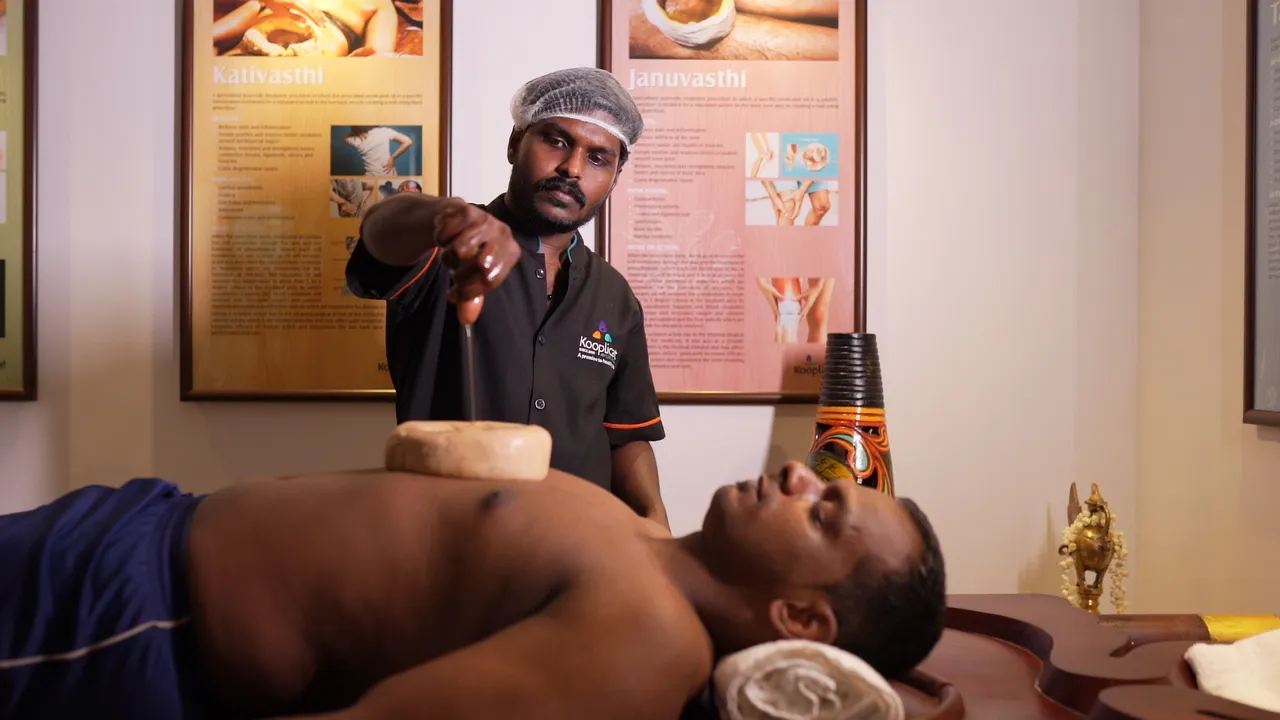
The team of doctors in Kooplicat Ayurveda Hospital helps you achieve this through the use of herbal medicines and external therapies which effectively relaxes the muscles, relieves inflammation to the nerves and its surrounding tissues. We also provide treatments that nourish muscles and nerves thus rejuvenating the degenerated vertebral disc thereby preventing further degeneration. Apart from internal and external treatments diet and lifestyle modifications are also advised and certain yoga postures are also taught for a better quality of life.
Diabetes mellitus (DM), commonly referred to as diabetes, is a chronic metabolic disorder in which there are high blood sugar levels over a prolonged period. Diabetes is due to either the pancreas not producing enough insulin or the cells of the body not responding properly to the insulin produced.
Insulin is the principal hormone that regulates the uptake of glucose from blood. If there is less production of insulin or cells become insulin resistant, there would not be absorption of glucose in the body nor it gets stored in the liver, thus the glucose increases in the blood stream increasing the blood glucose level.
Common symptoms of diabetes: frequent urination, increased thirst and hunger, fatigue, weight loss, slow healing sores and tingling or numbness in hands and feet.
In Ayurveda, diabetes is correlated as madhumeha and the ayurvedic concept on the manifestation of the disease is essentially associated with improper dietary habits. The other causes are:
Diabetes is a metabolic disorder and it cannot be merely treated by controlling sugar levels. The treatment recommended in Ayurveda is aimed at rejuvenating the body to not only balance sugar levels, but also ensuring that no further complication is caused.
Kooplicat Ayurveda hospital provides you customised treatment in form of external treatments and medications that helps to balance the aggravated doshas, and personalised ayurvedic diet that helps to improve the quality of life, which later on may also help in controlling diabetes to an extent without any medication in future.
Dysmenorrhea is a medical term used for the pain that occurs during menstruation, specifically in the area of lower abdomen. Menstruation involves contraction of the uterine walls, which may lead to the blockage of blood vessels, tissue death and hence, causes pain in the lower abdomen which many women experience just before or during the menstrual periods.
The intensity and severity of the condition may range from annoying or a discomfort to more severe so that it interferes with everyday activities for a few days every month. While it may be seen in most women without any underlying pathology, there may be identifiable problems underneath which includes endometriosis or uterine fibroids.
Other signs and symptoms include: back pain, nausea, fatigue, headache and dizziness.
Our ancient acharayas has mentioned several classical ayurvedic formulations for the cure of dysmenorrhoea. Ayurvedic herbal, classical time tested medicines cures by establishing the equilibrium of tridosha (vata, pitta, kapha) and saptadhatus (tissue elements).
Kooplicat Ayurveda Hospital’s view to dysmenorrhea is as a doshic imbalance that can potentially be eliminated through balanced living that is characterized by appropriate personalised diet, herbal supplements, exercise, routine, yoga and meditation. We provide ultimate care and support to you in your journey of life as a female my making your monthly cycles stress free and easily manageable.
These days, many of us have jobs that require us to stare at computer screens for hours at a time. That can put a real strain on your eye as it requires a lot of effort from eye muscles. Working on a computer is more challenging to your eyes than reading a book or piece of paper, because a computer screen also adds the elements of screen contrast, flicker, and glare.
Computer Vision Syndrome (CVS), also referred to as Digital Eye Strain, describes a group of eye and vision-related problems that result from prolonged computer, tablet, e-reader and cell phone use. Many individuals experience eye discomfort and vision problems when viewing digital screens for extended periods and are most commonly seen in myopic or astigmatic individuals.
Symptoms are: eye strain, watering of eyes, dryness, itching, burning sensation and redness of eyes, head ache, neck and shoulder pain.
It is an accepted truth that our food and habits determine what we are. The habits that are accustomed by the person is the main cause for the condition and Ayurveda recommends to eliminate the cause at first place for the complete recovery.
Kooplicat Ayurveda Hospital has incorporated cooling and rejuvenating therapies for eyes affected by bright light, high voltage electric spark, and heat exposure along with eradicating the root cause of the disease. Local therapies and medication for nourishment along with customised ayurvedic diet are also provided to enhance your quality of life as well.
Asthma is a chronic inflammatory disease of the airways into the lungs presented to as difficulty in breathing. Symptoms vary in severity and frequency from person to person and may occur several times in a day or week in affected individuals, and for some people it may become worse during physical activity or at night.
During an asthma attack, the lining of bronchial tubes swell, causing the airways to narrow, reducing the flow of air into and out of lungs causing the muscles around to tighten which increases production of phlegm and difficulty to breathe assosciated with cough, wheezing and chest tightness. Recurrent asthma symptoms frequently can cause sleeplessness, daytime fatigue, reduced activity levels and school and work absenteeism.
Ayurveda focuses on removing the triggering factors and all the causes which flares up the condition. The aim of treatment is to move the excess kapha back to stomach and then eliminate it through external and internal therapies.
Kooplicat Ayurveda Hospital takes an initiative to provide you everything personalised based on your body constitution, severity and cause. We emphasise on using specific drugs and drug combinations along with customised diet plan to improve better quality of life and to prevent recurrence of disease.
A cough is supposed to protect and help you heal. It gets out stuff that doesn’t belong in your lungs and windpipe, like inhaled dirt or food. But if somebody coughs a lot, it can be a sign of a disease.
Cough, also known as tussis, is a voluntary or involuntary act that clears the throat and breathing passage of foreign particles, microbes, irritants, fluids, and mucus; it is a rapid expulsion of air from the lungs.
Coughs can be either acute or chronic. Acute coughs begin suddenly and usually last no more than 2 to 3 weeks. Acute coughs are the kind you most often get with a cold, flu, or acute bronchitis. Chronic coughs last longer than 2 to 3 weeks. Causes of chronic cough include:
According to Ayurveda, Kasa (Cough) is the disease or symptom of respiratory tract occurring due to obstruction of Vata dosha (basic body element) and its reverse movement. Rough exercises, dry and rough foods, suppression of natural urges are also considered to be the causes of cough, in addition.
As per Ayurveda, it is said to eliminate the cause first and then treat the disease. It does not merely consider the symptoms alone. After eradicating the cause, all the vitiated doshas (basic elements) needs to be brought back to harmony for recovery.
We Kooplicat Ayurveda hospital team helps you to achieve this through customised treatments, internal medications and strict ayurvedic diet that are decided based on the body constitution of each individual. We also help you to incorporate certain habits and regimen that will help to prevent the recurrence of the disease in future.
Buerger’s disease (TAO) is a rare but recurring progressive inflammation and thrombosis of arteries and veins of hands and feet. In most cases, it affects chronic cigarette smokers who are young or middle aged. It is characterized by narrowing or blockage (occlusion) of the veins and arteries of the extremities, resulting in reduced blood flow to these areas.
In most cases, the first symptom is extreme pain of the lower arms and legs while at rest. Affected individuals may also experience cramping in the legs when they walk, limping (claudication), sensitivity to cold, and color changes in extremities (cyanotic blue or reddish blue). In severe cases, it may lead to gangrene.
Buerger’s disease is considered as one of the Raktha Pradoshaja Vikara where Vata (basic element of body) and Rakta (tissue element) are involved. This occurs due to factors that vitiate Vata and Rakta such as:
Based on the pathogenesis, signs, and symptoms, Ayurveda correlates this to be a type of Vatarakta. At Kooplicat Ayurveda Hospital, we help you to eliminate the basic pathology by proper medications, lifestyle changes, and certain procedures that help to eradicate the cause and correct the damage that has already happened.
We also provide a customized Ayurvedic diet based on your constitution and condition which serves to improve your illness.
ASD is a genetic developmental disorder characterized by difficulties with social interaction and communication, and by restricted and repetitive behavior. Although it is hard to diagnose before 24 months, symptoms often surface between 12 to 18 months.
Signs of autism include abnormal body posturing or facial expressions, abnormal tone of voice, poor eye contact, behavioral disturbance, and deficits in language comprehension.
In Ayurveda, autism is defined as the disarrangement in brain nerves and cells which causes impairment and functioning of the mind. It could be a result of improper metabolism where the individual is unable to digest beneficial substances and eliminate toxins. Parental defects (matruja or pitruja vaikalya) and their food and habits are also important reasons.
Autism is considered a condition where the normal movement of Vata is suppressed, causing Vata imbalance, specifically Prana Vata. This imbalance affects neurological functions, brain activity, concentration, speech, and memory.
While complete reversal is difficult, the patient’s behavioral and communicational aspects can be significantly improved. As per Ayurveda, it is advised to stabilize the imbalanced Vata dosha along with rectifying metabolism problems.
At Kooplicat Ayurveda Hospital, treatment is aimed at the removal of toxins from the body. Digestion, metabolism, and nourishment of the cells are improved by intake of herbs, healing oil massage, and toxin cleansing procedures.
An inflammatory skin condition where the hair follicles of skin get plugged with oil and dead cells resulting in breakouts on the face, forehead, neck, shoulders, and back. Acne is more common in teenagers although it affects all age groups. Social withdrawal is a main issue caused by this, affecting academic and professional performance.
According to Ayurveda, acne (Youvana Pidaka) is not only a skin-related problem but also a disturbance in the internal metabolism arising due to:
According to Ayurveda, these causative factors cause an imbalance in Kapha and Vata dosha leading to indigestion (Agnimandya), formation of toxins, and vitiation of blood (Rakta dushti).
Ayurveda aims at treating the cause by elimination and prevention rather than just treating symptoms. We detoxify the blood and body, cleansing from the inside out. External applications help destroy bacteria by inducing oxygenation, while internal medications restore a clear complexion.
Allergic dermatitis (ACD) is the manifestation of an allergic response caused by contact with an allergen (soaps, cosmetics, fragrances, fabrics) usually presented as red rashes with severe itching and tenderness. These rashes may also present with blisters, oozing, and a burning sensation.
As per Ayurveda, dermatitis occurs not only due to allergens but may also arise due to irregularities in internal metabolism. ACD is considered the most prevalent immunotoxicity in humans where causes lead to disturbance in Vata and Kapha, leading to indigestion, formation of toxins, and vitiation of blood (Rakta dushti).
Being a life science, Ayurveda eliminates the disease by detoxifying blood and body and cleansing from the inside out. At Kooplicat Ayurveda Hospital, we don’t merely go for symptoms; we consider the individual root cause. We provide tailor-made treatments and medications along with psychological assurance and a guideline for an appropriate diet plan.
A condition characterized by an exaggerated immune system response to allergens (mainly pollens) that results in inflammation of nasal mucosa leading to stuffy nose, sneezing, redness, and itching of eyes, throat, and ears. Also known as hay fever, it may present with headache, fatigue, and disturbed sleep.
Allergic Rhinitis (Pratishyaya) can occur due to intake of antagonistic foods, cold climates, reduced digestive power, and exposure to pollens/dust. These causes lead to a disturbance in metabolism and production of toxins (Ama) in the body and low immunity.
Treatment aspects mainly aim at the correction of metabolism, clearing the sinus, elimination of toxins, and balancing the equilibrium of doshas. We help you achieve this through customized treatments, internal medications, and a strict Ayurvedic diet decided based on the body constitution of each individual.
Alopecia is an autoimmune disease where the hair follicles are being attacked, causing hair to fall out in patches. It can be classified as Alopecia Areata (patches), Alopecia Totalis (entire scalp), or Alopecia Universalis (entire body).
Ayurveda sees alopecia (Indralupta) as the result of habituation to foods and conditions that are non-compatible (excess salt, stress, anger). Due to incorrect habits, Vata and Pitta get aggravated and localize in the hair pores, obstructing the microchannels (Rakta and Kapha) that supply nutrients to the hair follicle.
It is necessary to reduce the aggravated doshas by purification of the body and elimination of wastes through treatments that improve blood circulation and promote hair growth.
At Kooplicat Ayurveda Hospital, we provide customized care in the form of external treatments and internal medications that help in the regeneration of hair, preventing recurrence and ruling out the need for hair transplantation.
Alzheimer’s disease is a progressive neurological disorder where the brain cells degenerate causing memory loss and cognitive decline. It is the most common form of dementia, causing confusion with time/place and problems with language usage.
According to Ayurveda, Alzheimer’s is considered as Smrithinasha caused by depletion of Dhatus (tissue elements) due to vitiation of Vata dosha. It occurs when Vata gets severely vitiated in Majja Dhatu (nervous tissue), causing drying and degeneration of the brain.
Ayurveda aims at ceasing the progression by providing nourishment to the brain and removing the causes. We provide customized external treatments which strengthen the brain and remove toxins, along with psychological intervention including counseling and meditation. A personalized diet is also provided to promote a healthier quality of life.
Anaemia is a condition that develops when your blood lacks enough healthy red blood cells or hemoglobin. Symptoms include shortness of breath, fatigue, paleness of skin, lack of perspiration, cold extremities, and change in digestion.
According to Ayurveda, anaemia (Pandu) occurs due to disturbances in internal metabolism. It occurs when there is an imbalance in Pitta dosha. This vitiated Pitta moves through the main arteries, propelled by Vata, and gets lodged between skin and muscles, aggravating Kapha, Rakta, and Mamsa, imparting a pale color to the skin.
Ayurveda recommends treating the underlying causes rather than just symptoms. Our team provides effective service by utilizing natural herbs in specific combinations customized for each person. We help improve the absorption of iron and other nutrients by the body through rejuvenative treatments, making you permanently free from anaemia.
Ankylosing Spondylitis (AS) is a form of chronic inflammatory arthritis that primarily affects the spine and sacroiliac joints. It can cause your vertebrae to fuse together resulting in a hunched-forward posture. Symptoms include low back pain, stiffness, and swelling.
According to Ayurveda, AS is caused due to aggravated Vata dosha. This imbalance causes degeneration and inflammation of the spine. Triggering factors include excessive exertion, spicy/incompatible foods, stress, and a sedentary lifestyle.
Treatment is most successful during the initial stages. Ayurveda aims at digesting the Ama (toxins) using herbs and balancing the aggravated Vata. Our approach is holistic, comprising diet modifications, lifestyle changes, Ayurvedic therapies, Yogaasanas, Pranayama, and meditation to help the body get back to a state of balance.
Anal fissure is a small cut or tear in the lining of the anal canal which most commonly occurs while passing hard stools. It causes severe cutting, tearing, and burning pain, often with streaks of blood.
Ayurveda mentions anal fissure as Guda Parikarthika. Due to triggering factors (low fiber, low fluid, irregular habits), Pitta dosha vitiates and develops indigestion. This causes vitiation of Apana Vata, leading to fissures, severe pain, and spasm.
It is very important to regulate bowel habits. Ayurveda mainly highlights the need for correcting digestion and metabolism to prevent constipation. We provide a personalized diet, specific drugs to ease bowel movement, and external/internal medications to heal the ulcer so that you get relieved from discomfort and pain.